Met Gala Accused of Cultural Appropriation as Celebrities Prepare to Dress Like Ordinary People
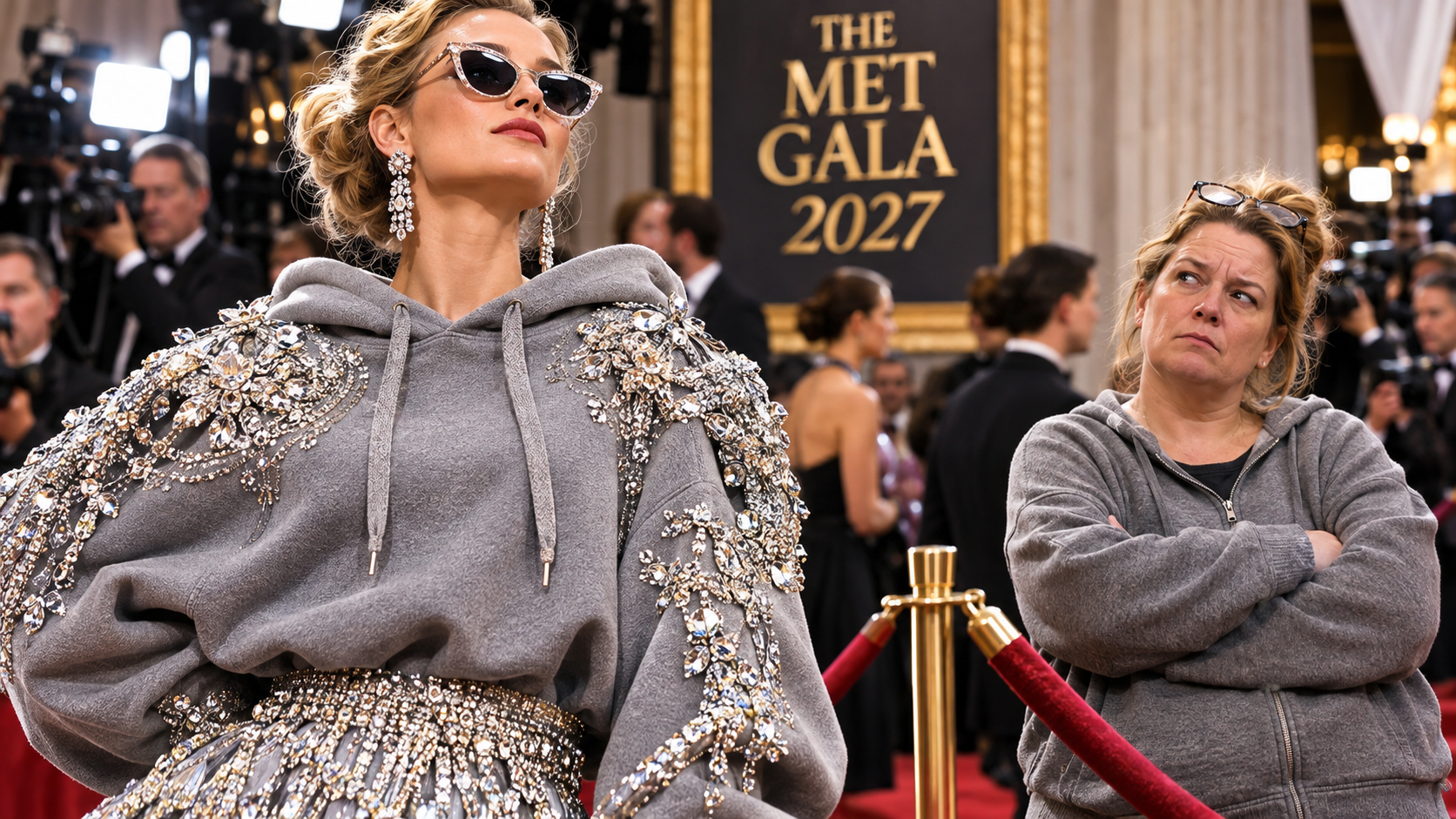
NEW YORK — The Metropolitan Museum of Art has announced that its 2027 Costume Institute exhibition will celebrate ordinary clothing, raising concerns that some of the world's wealthiest and most elaborately dressed celebrities may soon begin presenting themselves as people who routinely purchase socks in packages of six.
The exhibition, titled extraORDINARY: Fashion and the Poetics of the Everyday, will examine the artistic possibilities of jeans, T-shirts, sweatshirts, puffer jackets, and other garments traditionally worn by people who have somewhere to be.
According to the museum's announcement, the exhibition opens May 9, following the annual Met Gala fundraiser on May 3. The event's official dress code has not yet been announced, leaving unresolved the extent to which celebrity attendees will be expected to imitate ordinary people.
For those who have spent their entire lives dressing ordinarily without professional assistance, the prospect raises significant questions about representation, authenticity, and the unauthorized elevation of routine wardrobe decisions into luxury fashion statements.
Ordinary People Have Been Doing This for Years
Everyday clothing is not a recent development. Ordinary Americans have worn jeans, sweatshirts, and practical outerwear for generations, frequently without receiving recognition from a major cultural institution.
Many have developed sophisticated personal systems for selecting clothing based on weather, laundry availability, and whether a particular shirt has already been worn twice that week. These practices represent years of accumulated experience that cannot necessarily be replicated through a single appearance on a red carpet.
Yet the Met's exhibition will feature the work of prominent designers who reinterpret familiar garments through unconventional materials and construction techniques. As Vogue explains, the collection includes high-fashion interpretations of clothing that millions of people already own.
The distinction raises a fundamental question: When a designer transforms an ordinary shirt into an extraordinary garment, who receives credit for the original ordinariness?
The designer may receive recognition for the transformation, but the person who has worn a similar shirt to mow the lawn for eleven consecutive summers has made an equally sustained commitment to the garment's cultural significance.
The Problem of Celebrity Authenticity
The Met Gala has traditionally celebrated fashion through elaborate ensembles, considerable expense, and the participation of internationally recognized celebrities. Its new emphasis on everyday clothing presents an unusual challenge for attendees whose ordinary lives may differ substantially from those of the people they are being asked to represent.
An actor wearing a professionally distressed sweatshirt may accurately reproduce the appearance of ordinary clothing without possessing the experiences that ordinarily produce its distress.
Similarly, a celebrity arriving in jeans selected by a stylist cannot automatically claim the same cultural standing as someone who purchased jeans because the previous pair developed a hole in an inconvenient location. The difference is not necessarily visible. It is experiential.
A reasonable standard of authenticity might therefore require attendees to demonstrate familiarity with at least three ordinary wardrobe circumstances, including selecting an outfit in less than four minutes, wearing a garment because everything else is in the washing machine, or discovering that an apparently clean shirt has toothpaste on it after leaving the house.
Such qualifications would not prevent celebrities from participating. They would simply establish that everyday fashion requires more than access to expensive interpretations of inexpensive clothing.
The Underwear Calendar Deserves Recognition
The exhibition's focus on jeans and outerwear also risks overlooking an important category of everyday fashion: clothing selected through systems of personal organization that have ceased to correspond with reality.
Consider underwear bearing the names of the days of the week. These garments establish a clear relationship between clothing and the calendar, but ordinary circumstances frequently disrupt that relationship.
A person wearing Tuesday underwear on Friday may be responding to laundry delays, personal preference, or the simple availability of Tuesday underwear. The decision represents a practical accommodation to changing conditions, achieved without professional styling, institutional funding, or advance consultation with the calendar.
Under an authentic everyday-fashion framework, such an individual would possess considerable authority to discuss the relationship between garments, routine, and personal identity.
It remains unclear whether any Met Gala attendee will be asked to demonstrate comparable experience.
Recognition Without Representation
The Metropolitan Museum has indicated that the exhibition will encourage visitors to reconsider the significance of their own clothing. Its design will place museumgoers' everyday attire in visual dialogue with the works on display, acknowledging the relationship between fashion and lived experience.
That is a meaningful gesture, but it does not resolve the question of representation at the gala itself.
Visitors may be encouraged to wear their favorite jeans to an exhibition celebrating ordinary fashion while the event that precedes it remains an exclusive fundraiser attended by invited guests.
There is no indication that ordinary people have been prohibited from participating in the exhibition. Nor has the museum announced that celebrities must dress casually at the gala. Nevertheless, the decision to celebrate everyday clothing creates an opportunity to recognize those who have maintained the tradition without sponsorship, professional styling, or institutional encouragement.
A modest first step would be the establishment of an Ordinary Person Authenticity Standard, allowing attendees to document their experience with laundry baskets, discount clothing racks, and garments worn beyond their recommended replacement dates.
The Met may be prepared to celebrate the extraordinary beauty of ordinary clothing. What remains unclear is whether anyone attending has ever had to wear Tuesday's underwear on a Friday.