Nike Celebrates Return of Prodigal Sneakers While Faithful Footwear Goes Unrecognized
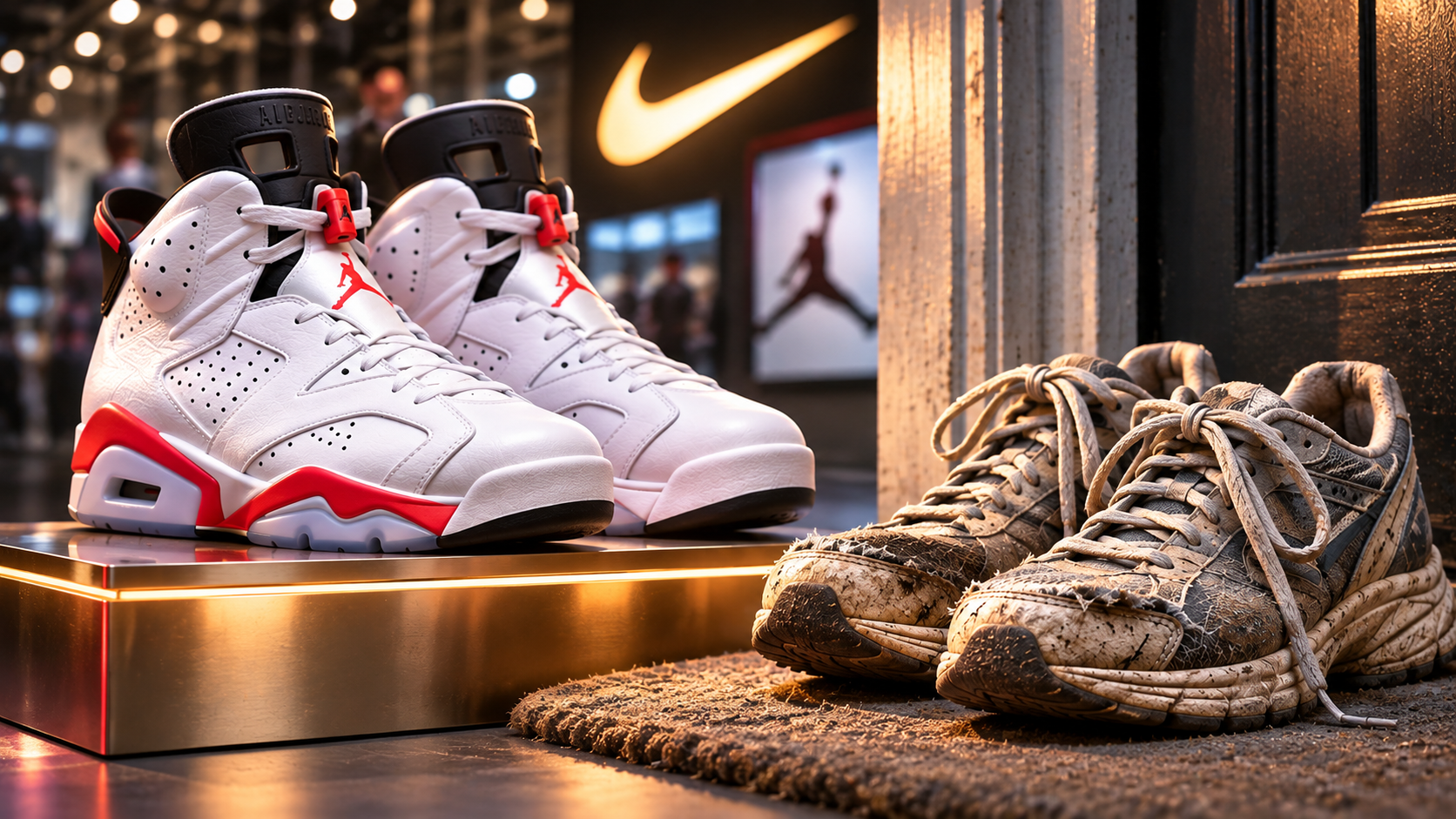
BEAVERTON, Ore. — Nike is welcoming back a pair of sneakers that has been absent from new retail releases for twelve years, raising questions about the company's treatment of millions of shoes that have remained faithfully employed throughout the same period.
The Air Jordan 6 “White Infrared,” originally introduced in 1991 and last released in 2014, returns November 7 with a $215 price tag and renewed attention from sneaker enthusiasts. According to Nike's official announcement, the revived design celebrates Michael Jordan's championship history and restores the original Nike Air branding to its heel.
The return has been welcomed throughout the sneaker industry, where prolonged absence is frequently treated as evidence of desirability. Yet the celebration has exposed an uncomfortable disparity between footwear that disappears from retail shelves and footwear that continues performing its duties without interruption.
While the returning Air Jordan receives promotional photography, retail displays, and considerable public attention, countless dependable sneakers remain stationed beside front doors, waiting for someone to acknowledge their service.
The Rewards of Leaving
The White Infrared's return follows a twelve-year absence from new retail releases of that particular colorway. As Sneaker News reports, the 2026 edition recreates the original colorway while restoring branding associated with its 1991 debut.
The sneaker's history is significant. Michael Jordan wore the Air Jordan 6 during his first NBA championship season, giving the design a legitimate place in basketball and footwear history.
But the industry's enthusiasm for its return establishes a troubling incentive structure. A shoe that remains unavailable in new retail releases for twelve years can command $215 and receive extensive media coverage upon reappearing. A shoe that has spent those same years reporting for daily duty may be rewarded with a trip through the washing machine, provided its owner remembers to remove the insoles.
This disparity suggests that the sneaker industry values absence more highly than attendance, an approach that would be difficult to justify in most conventional workplaces.
Twelve Years of Unrecognized Service
Consider the ordinary athletic shoe purchased in 2014 and still performing occasional household duties in 2026.
Such footwear may have accompanied its owner through employment changes, family vacations, grocery shopping, medical appointments, and several generations of mobile phones. Its original cushioning may have deteriorated, its laces may no longer match, and its appearance may have prompted repeated suggestions that it be replaced.
Nevertheless, it remains available. These shoes have not demanded anniversary editions, exclusive distribution arrangements, or promotional campaigns. They have simply continued showing up, frequently with little advance notice and under increasingly unfavorable conditions.
Many have been reassigned from respectable public footwear to yard work, garage cleaning, and emergency trips outside to investigate unexplained noises. The industry has offered no formal recognition for this transition. A sneaker that once accompanied its owner to restaurants may now be permitted outdoors only when the grass needs cutting.
Its loyalty has effectively become grounds for demotion.
The Prodigal Sneaker Problem
The contrast resembles the familiar story of the prodigal son, in which a returning family member receives a celebration while the one who remained at home questions the unequal treatment.
In the footwear industry, the returning sneaker is not merely welcomed back. It is given a premium price, fresh packaging, and an opportunity to reclaim its former position in the household.
The faithful sneaker, meanwhile, is expected to continue serving without complaint. Its accumulated mileage, years of dependable attendance, and willingness to endure adverse conditions have produced no comparable public recognition.
Consumers are encouraged to celebrate the arrival of a familiar design while the sneakers that have carried them through the intervening years remain unrecognized. The question is not whether the Air Jordan deserves appreciation, but whether appreciation should be reserved primarily for footwear that has been unavailable.
A Recognition Standard for Faithful Footwear
A reasonable solution would be the establishment of a Faithful Footwear Recognition Initiative, providing minimum acknowledgment for sneakers that have demonstrated sustained service.
Eligibility could be determined through years of ownership, documented mileage, and evidence of continued usefulness despite cosmetic deterioration. Applicants would be required to provide evidence of at least three years of uninterrupted household service, including one documented occasion when their owner considered replacing them but decided they were still good enough.
Additional consideration might be awarded for service during household moves, inclement weather, unexpected automobile repairs, and prolonged periods of standing in lines. Shoes surviving multiple owners could qualify for special recognition, while pairs whose original laces remain intact might receive a distinction for exceptional organizational stability.
The initiative would not require Nike to discontinue retro releases or abandon the commercial value of nostalgia. It would simply recognize that uninterrupted service represents an achievement separate from historical popularity.
A modest certificate of appreciation, commemorative shoebox, or retirement ceremony would provide meaningful acknowledgment without substantially disrupting the existing sneaker market. For footwear still performing active duties, recognition might also include protection against involuntary reassignment to lawn-mowing responsibilities.
Loyalty Should Not Require an Absence
Nike's celebration of the White Infrared demonstrates the enduring appeal of familiar designs. The sneaker's return gives collectors an opportunity to purchase a historically significant model with details recalling its original release.
But the occasion also provides an opportunity to reconsider how the footwear industry measures loyalty. A shoe that returns after twelve years may be celebrated for its history. A shoe that has remained in service for twelve years possesses a history of its own, written in worn soles, faded fabric, and the accumulated evidence of places its owner actually went.
The distinction deserves acknowledgment, particularly when the returning sneaker is being sold for more than many consumers originally paid for the shoes they still wear.
The prodigal sneaker has returned, and Nike has prepared a celebration. The faithful sneakers never left. They are still waiting by the door.