Americans Assured Their Votes Are Private, Reminded Their Neighbors Can Still Monitor Their Behavior
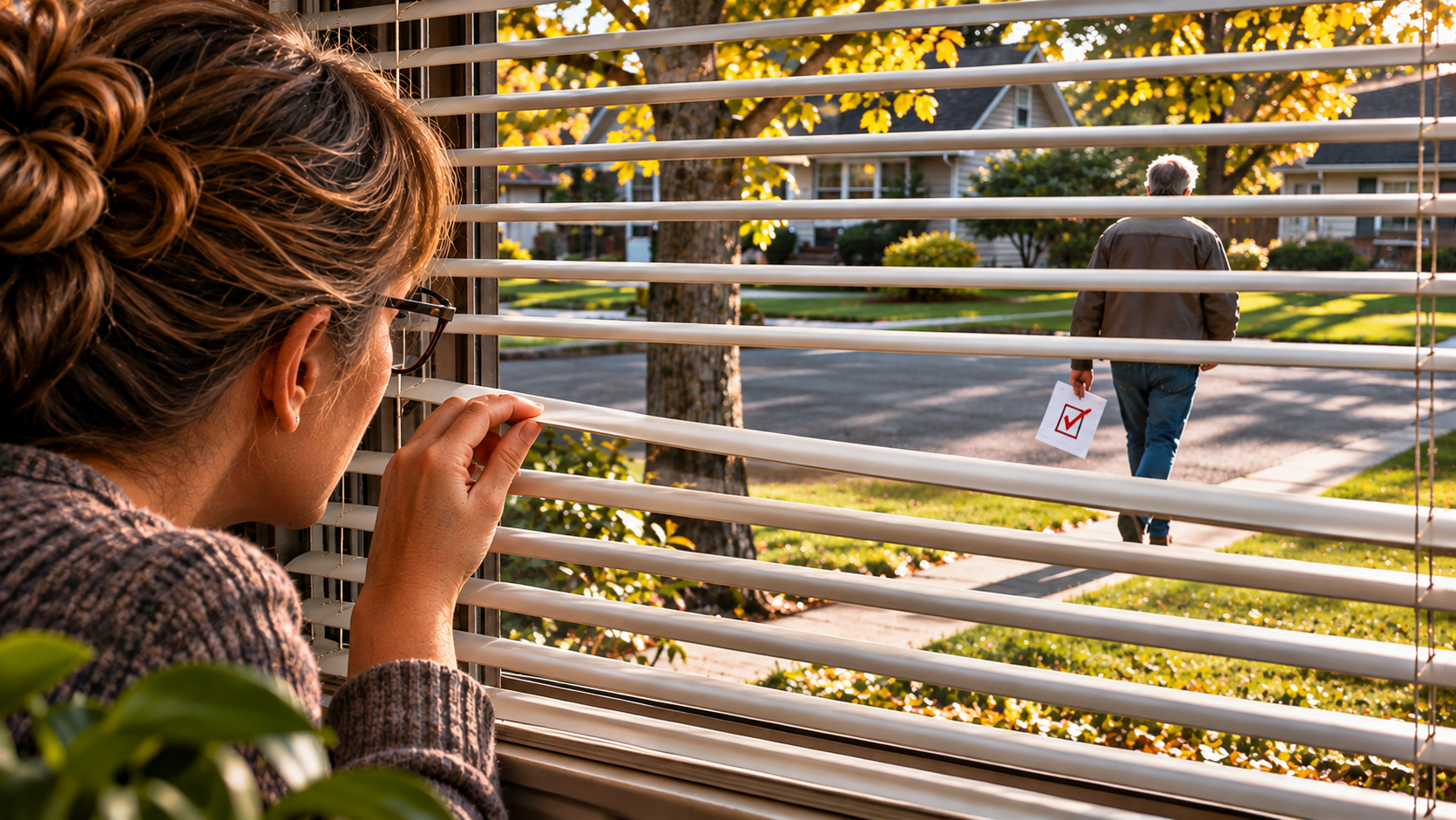
WASHINGTON, D.C. — Americans emerged from Tuesday's midterm elections reassured that their votes remain secret, although recent political advertising has reminded them that the decision to vote at all may be available for inspection by people they have spent considerable time avoiding.
The distinction has raised an uncomfortable question: Why does the neighbor who complains about the height of your grass need to know whether you participated in the electoral process? The answer appears to be that the nation's election laws provide one kind of privacy while leaving another subject to the curiosity of people with internet access and an unusual interest in civic attendance.
Your Vote Is Secret. Your Absence Has Witnesses.
Under American election law, the secret ballot protects the identity of the candidates and issues selected by individual voters. State voter records, however, commonly include information about whether someone participated in a particular election. Access to those records, and the uses permitted, vary by state.
The U.S. Election Assistance Commission provides guidance concerning voter-registration records, confidentiality, and the maintenance of voter lists.
In practical terms, an American can enter a voting booth, make a deeply personal political decision, and emerge confident that the decision itself will remain confidential. The fact that the American entered the booth, however, may be recorded for posterity.
This arrangement has apparently satisfied generations of election administrators who believe privacy is best maintained by protecting the contents of an activity while maintaining records of precisely who engaged in it. The Offended has been unable to determine why this principle has not been extended to bathroom visits.
Your Neighbors Will Know. Apparently, They Won't Be Happy.
On October 18, Elon Musk's America PAC posted an election advertisement to X warning Americans that their neighbors would know if they failed to vote and might be displeased by the discovery.
The advertisement, reproduced in an October 20 report by Twitchy, featured a disapproving woman pointing directly at the viewer, apparently representing the nation's newly deputized neighborhood attendance monitors.
The message urged Americans to make plans to vote by November 3, while emphasizing that voting records are public. The implied consequence of nonparticipation was not a fine, imprisonment, or the loss of constitutional rights, but something potentially more disturbing: a disappointed neighbor.
An October 30 RealClearPolitics investigation documented the America PAC advertisement alongside other turnout efforts using public voting histories. The report also described Democratic-aligned outreach, including postcards reminding recipients that participation is public record.
The approach therefore enjoys a rare distinction in American politics: organizations with differing political objectives have independently discovered that making people uncomfortable around their neighbors may encourage civic participation.
The Offended congratulates both sides on identifying a common national priority.
There Is Apparently a Website for This
Americans wishing to investigate their friends' civic attendance need not establish a surveillance operation from scratch.
A website called Did They Vote? allows users to search for a person by name and location to check available registration and voting-participation information. The service explains that it uses official state voter files and does not disclose ballot choices, street addresses, telephone numbers, or other excluded personal details.
The website presents its service as a means of encouraging friends and family to vote. This is a thoughtful public service for anyone who has exhausted ordinary conversational topics and would like to introduce a formal review of a relative's electoral attendance history.
The site's privacy safeguards are reassuring. Visitors cannot simply request a list of everyone living at a particular address, and the service does not reveal whom anyone voted for.
It does, however, provide a means of examining whether a specific acquaintance participated in certain elections, assuming the relevant records are available.
The distinction is important because knowing that someone voted is apparently acceptable, while knowing that they voted for a candidate you dislike would be an unacceptable invasion of privacy.
American democracy has developed an impressive capacity for drawing lines in unusual places.
The Homeowners Association Has Entered the Chat
For years, homeowners associations have maintained community standards through restrictions on mailbox colors, decorative lawn ornaments, and the precise number of acceptable inches between a shrub and a sidewalk.
Public voting-participation records offer an entirely new category of behavior for concerned neighbors to discuss.
A resident who has failed to vote in three consecutive municipal elections could be asked to explain why the neighborhood's political participation rate has suffered under their occupancy. A particularly ambitious association might establish a Civic Engagement Compliance Committee, complete with quarterly reports, laminated participation certificates, and an appeals process for residents who insist they were simply out of town.
Committee members would presumably be required to vote on all matters concerning voting, although no mechanism has yet been proposed for determining whether they voted on the vote concerning voting.
The Offended considers this an administrative oversight.
Research Suggests That Being Watched Encourages Participation
There is actual research behind the social-pressure approach.
A large-scale voter-mobilization study summarized by J-PAL examined mailings that reminded people of their civic duty, disclosed household voting histories, or presented information about neighbors' participation. The researchers found that social pressure increased turnout, with the neighbor-focused intervention producing the largest effect among the approaches tested.
This is encouraging news for anyone who has wondered whether democracy could be improved by making people slightly uncomfortable in their own homes.
The findings also suggest several unexplored opportunities. Recycling rates might improve if residents received lists of neighbors who failed to put out their blue bins. Library attendance could increase if overdue borrowers knew their street was watching. Communities might establish public records of who attended the annual neighborhood potluck and who claimed to have other obligations.
Such initiatives would undoubtedly require additional recordkeeping, but the nation's growing familiarity with participation monitoring suggests the paperwork would be manageable.
A Formal Disclosure Requirement Seems Only Fair
Public voting histories serve legitimate purposes, including election administration, research, and campaign outreach. Encouraging participation in democracy is also widely regarded as a worthwhile objective.
What remains troubling is the lack of reciprocity.
If one citizen is permitted to examine another citizen's voting participation, surely the examined citizen deserves to know that the examination occurred. The Offended therefore proposes a modest reform: Anyone who checks a neighbor's voting history should be required to disclose that they checked it.
That disclosure should itself become a public record, available for inspection by the neighbor whose voting history was examined.
Naturally, anyone examining the record of who examined the original voting record would also be required to disclose their examination. The resulting system would provide complete transparency while ensuring that no American could investigate another American's civic participation without becoming the subject of an equally intrusive investigation.
Election administrators might object that such a system would generate an endless series of records documenting the inspection of other records. We consider that a small price to pay for accountability.
After all, the government has already established that participation is everybody's business. It seems only reasonable that curiosity should be, too.
Your vote is secret. Your absence has witnesses. And under our proposed reforms, the witnesses would also have witnesses.