Democrats, Republicans Prepare Bipartisan Exchange of Grievances Following Midterm Elections
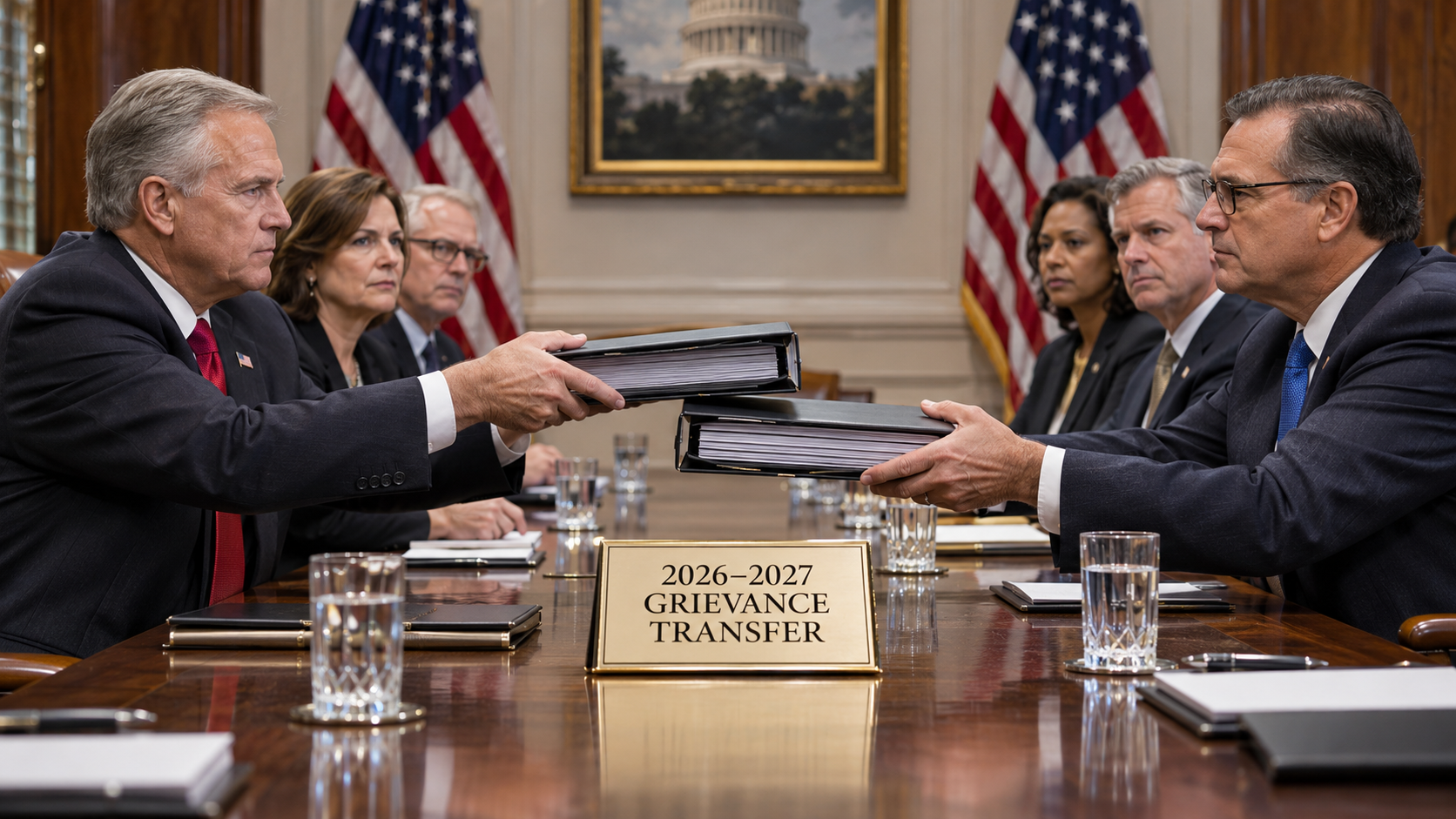
WASHINGTON, D.C. — With Democrats preparing to assume control of both chambers of Congress, supporters of both major political parties face an urgent logistical challenge: exchanging the political arguments, constitutional objections, and expressions of outrage they have spent the past two years perfecting.
The transition follows Tuesday’s midterm elections, with the final allocation of congressional seats determining the balance of legislative authority. While congressional leaders prepare for the next session, an equally important transition awaits the American public. Millions of politically engaged citizens must determine which previously unacceptable behaviors have become necessary instruments of democracy, and which formerly indispensable governing practices now constitute dangerous abuses of power.
A proposed Bipartisan National Exchange of Grievances would streamline the process by allowing Republican and Democratic supporters to trade their existing collections of complaints, protest strategies, constitutional concerns, and accusations of partisan misconduct. The exchange would ideally be completed before the new Congress convenes in January, giving participants sufficient time to familiarize themselves with their revised positions.
A Peaceful Transfer of Complaints
Under the proposed arrangement, Republican supporters would surrender their current inventory of arguments defending congressional authority, majority rule, and the importance of allowing elected officials to implement the agenda voters selected. In return, they would receive an updated collection of objections concerning unchecked government power, insufficient transparency, legislative overreach, and the dangers of allowing one political party to control Congress.
Democratic supporters would relinquish their existing minority-party grievances and receive materials emphasizing the importance of respecting election results, permitting the majority to govern, and recognizing obstruction as an unacceptable threat to democracy. Both groups would retain permanent access to accusations of hypocrisy, which are considered essential bipartisan equipment and therefore exempt from the exchange.
Protest Materials Require Immediate Reassignment
The transition also presents practical challenges. Signs reading “Respect the Will of the Voters” would be transferred to Democratic supporters, while those declaring “Democracy Is Under Attack” would be made available to Republicans. Materials addressing congressional gridlock, partisan investigations, and legislative obstruction would require additional review to ensure that each complaint is assigned to the appropriate party.
Complaints about congressional investigations would require particularly careful handling. Democrats, who have objected to investigations they considered politically motivated, would assume responsibility for explaining why aggressive oversight is an indispensable constitutional safeguard. Republicans would receive the corresponding materials explaining why excessive investigations distract from governing and threaten to transform Congress into a partisan weapon.
The exchange would coincide with the transfer of congressional investigative authority. As NPR explains in its election coverage, control of Congress determines which party can direct committees, establish investigative priorities, and issue subpoenas. Whether those investigations constitute responsible oversight or partisan harassment will naturally depend upon which party is describing them.
Presidential Complaints Must Remain in Their Original Packaging
The exchange cannot be completed through a simple reversal of party labels, however, because President Donald Trump will remain in the White House. Republicans must retain their materials defending presidential authority while simultaneously acquiring new objections to congressional overreach. Democrats must assume responsibility for defending congressional power while preserving their existing concerns about excessive executive authority.
The resulting arrangement will require participants to distinguish between the dangers of concentrated government power and the necessity of exercising it, sometimes within the same sentence. The United States Constitution provides some guidance, having established separate legislative and executive branches without specifying which party is entitled to be most offended by the arrangement.
Organizers may therefore need to establish a special committee to determine which grievances transfer automatically and which remain attached to the presidency. Particular attention would be given to complaints involving executive orders, presidential vetoes, congressional subpoenas, and the use of government authority to frustrate the opposing party’s agenda.
Both Sides Raise Concerns About Fairness
Despite the obvious administrative benefits of a coordinated exchange, procedural disagreements are expected. Democratic participants would presumably insist that their new congressional majority entitles them to establish the agenda, select the meeting chair, and determine which complaints qualify for reassignment. Republican participants would object that allowing one party to establish all the rules represents an unacceptable concentration of authority.
Democrats would then explain that elections have consequences, while Republicans would respond that democracy requires meaningful protections for the minority. Both arguments have extensive histories of use by both parties, raising the question of whether they should be exchanged, duplicated, or simply left on the conference table for whichever delegation needs them next.
A preliminary proposal to resolve disputes through a majority vote would likely be opposed by the minority delegation on principle. Organizers would then be required to determine whether such opposition constitutes legitimate procedural dissent or deliberate obstruction, a classification that could itself change depending on which delegation controls the meeting.
Social Media Faces a Difficult Transition
The exchange is expected to present particular challenges for social media users, many of whom have spent years developing carefully worded explanations of why their preferred party’s conduct is fundamentally different from similar behavior by its opponents. Several common expressions will require immediate reassignment, including “This Is What the American People Voted For,” “We Must Hold Them Accountable,” and “The Constitution Is Not Optional.”
More complicated cases involve the phrase “Our Democracy,” which both parties have used extensively and which neither is expected to relinquish voluntarily. One possible compromise would allow both sides to retain the expression, provided everyone understands that its meaning may change according to the identity of the speaker, the composition of Congress, and the most recent election results.
Existing social media posts would not need to be deleted. They could instead be archived as evidence of what the opposing party now believes, allowing participants to preserve their previous arguments while simultaneously condemning those same arguments when expressed by someone else.
An Orderly Transition Is Essential
American elections routinely change more than the occupants of public office. They also change which political behaviors are considered courageous, which are considered dangerous, and which are described as unprecedented abuses of power. A congressional investigation may be either an essential constitutional safeguard or a partisan fishing expedition. Legislative obstruction may represent either a principled defense of minority rights or an assault on democracy. A narrow election victory may establish either a clear public mandate or evidence that the country remains too divided for decisive action.
The proposed Bipartisan National Exchange of Grievances would help ensure that these distinctions remain properly assigned. Ideally, the meeting would conclude with a ceremonial exchange of protest signs and a joint statement affirming the importance of protecting American democracy. The statement’s wording would require further negotiation, as both delegations would undoubtedly insist that the other poses the greater threat to it.
Participants could then return home, confident that their political principles remain unchanged despite the complete reversal of their practical application. The next exchange would be tentatively scheduled following the 2028 elections, subject to the results, and Americans could take comfort in knowing that while control of Congress may change, the nation’s supply of outrage remains secure.