Elon Musk's Space Data Centers Raise Troubling Questions About Who Will Inspect the Fire Exits
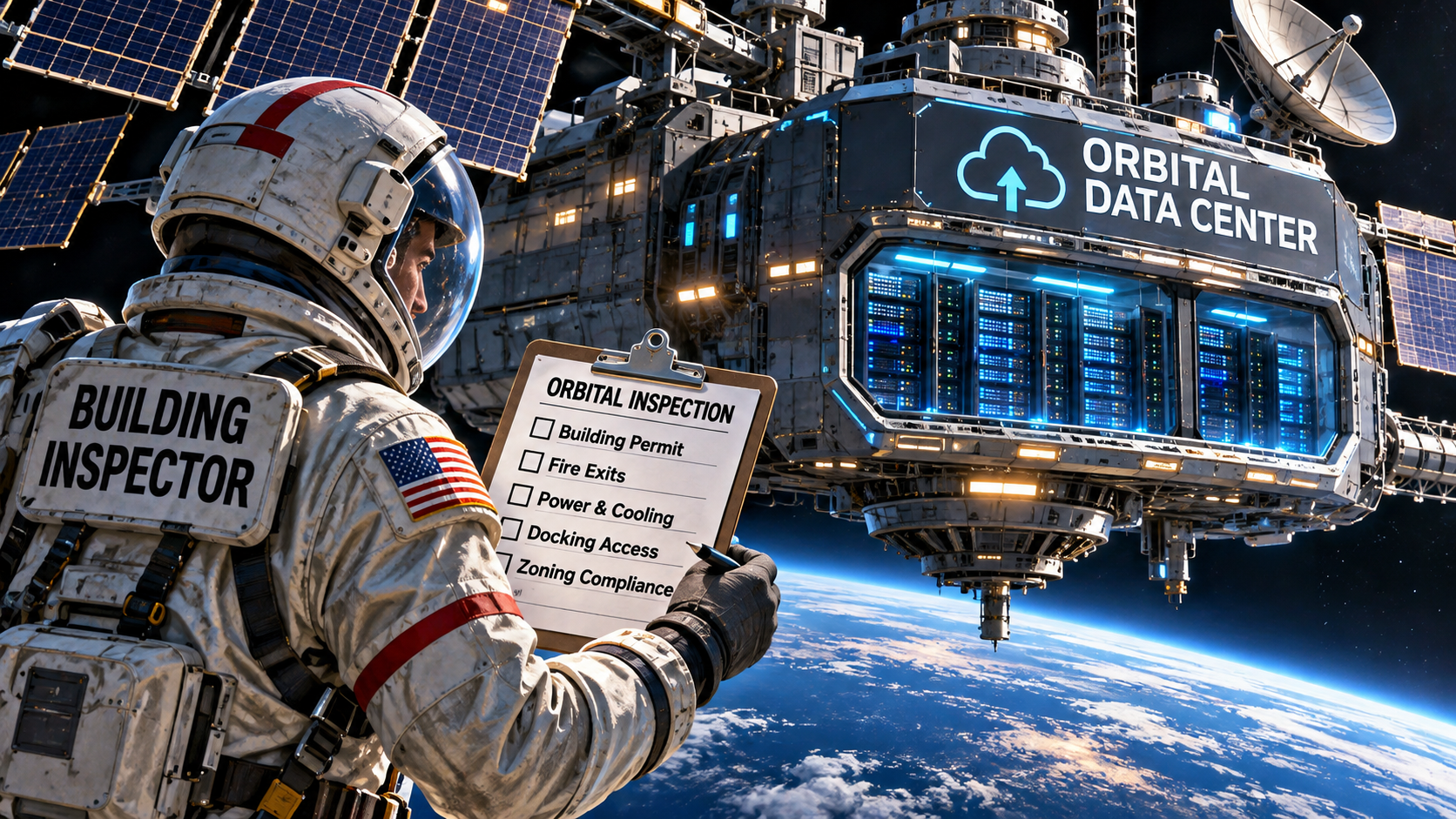
Elon Musk has suggested moving one of humanity's fastest-growing industries beyond the reach of terrestrial governments, neighborhood associations, and municipal planning boards. While engineers consider the feasibility of placing artificial intelligence data centers in orbit, an important question has received remarkably little attention: Who will issue the building permits?
On November 4, Musk wrote on X, "Data centers in space looking pretty appealing right now."
The observation comes amid growing resistance to the construction of energy-intensive computing facilities on Earth. Communities have raised concerns about electricity consumption, infrastructure demands, and the consequences of allowing enormous industrial installations to become their newest neighbors.
Space offers an attractive alternative. It has no residential neighborhoods, no homeowners associations, and remarkably few people prepared to complain about property values.
Unfortunately, it also appears to lack a functioning building department.
An Unacceptable Gap in Orbital Zoning
On Earth, constructing a data center can require land-use hearings, environmental assessments, electrical permits, and inspections. These safeguards help ensure that commercial development proceeds in accordance with established community standards.
In orbit, the situation becomes considerably less clear.
Who determines whether a satellite is properly zoned for commercial use? If two data centers occupy adjacent orbital paths, are they subject to minimum setback requirements? Can a neighboring spacecraft file an objection to an unsightly solar array?
These questions deserve serious consideration. A commercial structure on Earth may be required to maintain a prescribed distance from neighboring property. In space, neighboring property can approach at several kilometers per second.
Existing laws and international agreements govern various aspects of space activity. Yet none appears designed to ensure that an orbital server facility receives the same routine municipal inspections expected of a warehouse in Ohio.
The absence of gravity should not be mistaken for the absence of responsibility.
The Cloud Is Becoming Alarmingly Literal
For years, technology companies have encouraged consumers to store photographs, documents, financial records, and personal correspondence in something called "the cloud."
Consumers generally understood this expression to be metaphorical. Their information was stored in buildings on Earth, where technicians could access the equipment without requiring a launch vehicle.
Moving those computers into orbit threatens to introduce an unprecedented degree of literal accuracy into an industry traditionally comfortable with vague terminology.
It also raises questions about transparency. Should a company continue advertising cloud storage when its equipment is demonstrably above the clouds? Would customers be entitled to know the altitude at which their family photographs are being maintained?
The Offended believes consumers deserve a clear distinction between information stored in a terrestrial warehouse and information traveling overhead at orbital velocity.
At minimum, the industry's terminology should be updated before customers discover that their cloud storage has developed a measurable orbital period.
Technical Support May Require a Spacesuit
Space-based computing presents genuine engineering difficulties. Heat removal, radiation exposure, communications, launch costs, and orbital debris all complicate the operation of sophisticated equipment beyond Earth's atmosphere.
In particular, the vacuum of space does not provide the convenient refrigeration system many people might imagine. Without air to carry heat away, equipment must dissipate waste heat through other means, including radiators.
These are serious technical challenges. But they leave one familiar procedure conspicuously unresolved.
What happens when the server needs to be turned off and back on again?
On Earth, a technician can enter a building, locate the offending equipment, and perform this universally recognized repair procedure. In orbit, the same operation might require robotic intervention, redundant systems, or the replacement of an entire satellite.
Employers would also need to reconsider traditional information technology job descriptions. An ordinary technician may reasonably expect a salary, health insurance, and occasional opportunities to work from home. Requiring that employee to work several hundred kilometers above home represents a substantial alteration of the employment arrangement.
It remains unclear whether an orbital technician could claim mileage reimbursement or whether a commute involving a rocket would qualify for the company's existing travel allowance.
The Parking Situation Is Equally Troubling
Even if engineers resolve the technical challenges, commercial space infrastructure will require maintenance access and deliveries. Replacement components must somehow reach the facility, and visiting spacecraft will need somewhere to dock.
Would a maintenance vehicle be required to display a temporary parking permit? Could an improperly docked spacecraft be towed? And which authority would adjudicate a complaint about blocking the loading zone?
These are routine administrative matters on Earth. Their absence from orbital development discussions suggests that the commercial space industry may be proceeding without sufficient consultation with municipal parking enforcement.
The situation becomes more concerning when one considers the lack of a conventional street address.
A company cannot reasonably expect suppliers to deliver replacement equipment to "the third satellite on the left, immediately after sunrise."
Regulation Must Not Be Left Behind
There are legitimate reasons to investigate orbital computing. Solar energy is abundant beyond Earth's atmosphere, and moving certain computing operations into space could eventually reduce pressure on terrestrial energy infrastructure.
The technology remains expensive and technically demanding, but those obstacles may not be permanent. The administrative questions, however, will only become more complicated as the industry develops.
Humanity has repeatedly demonstrated an unfortunate tendency to create transformative technologies before establishing the paperwork necessary to supervise them.
Artificial intelligence is advancing. Commercial spaceflight is expanding. Yet no prominent discussion appears to have established whether a space-based data center must display its business license near the entrance.
Elon Musk may ultimately be correct that space offers an appealing future for computing infrastructure. The Offended does not dispute the possibility.
We merely insist that before humanity begins relocating its servers into orbit, someone determine which office will be responsible for inspecting the fire exits.
Preferably before the ribbon-cutting ceremony.