On Heidi Game Anniversary, Heidi Viewers Ask Why Their Side of the Story Never Gets Told
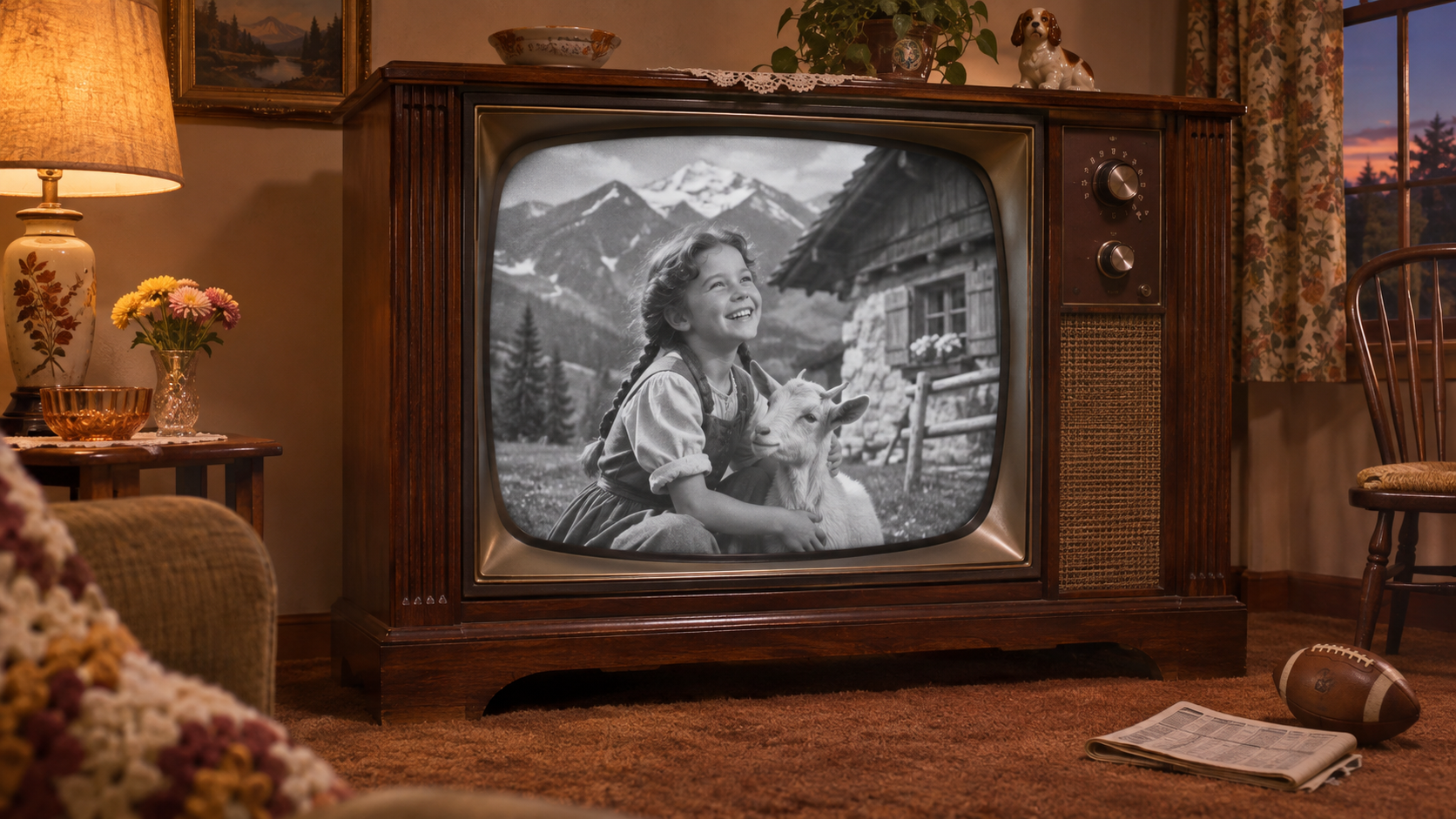
On November 17, 1968, NBC cut away from the closing minutes of a New York Jets–Oakland Raiders game to air Heidi. Thousands of football fans called to complain, and the network apologized. Fifty-eight years later, another group of viewers has asked for its account of the evening to be entered into the record. They were the children who had been told they could watch Heidi at seven.
“My mother had already said I could stay up for it,” said Margaret Dwyer, who was eight at the time. “That was a separate negotiation. NBC had no idea what I’d given up to get that agreement, including a bath during the first half.”
Dwyer said she understood why football fans wanted to see the end. She would like them to imagine missing the beginning of a movie and being expected to infer, from the scenery and a conversation already underway, why a little girl was being left with a man on a mountain.
Already in Progress
The Committee for Programs That Started on Time says the anniversary has become an occasion to commemorate one kind of interrupted viewing. Its members remember another. They would sit down at the time printed in the listings and hear an announcer tell them, “We now join our regularly scheduled program, already in progress.” By the time the picture came up, the main character was apologizing for something nobody in the room had seen.
“The word that bothered me was our,” Dwyer said. “If it was our regularly scheduled program, I’d have liked to be there when it started. Whoever had it before us could at least have left a note.”
The committee has asked broadcasters to research how many opening scenes children lost to overruns in the years before viewers could pause or restart a program. Members have volunteered to help reconstruct those scenes from memory. Dwyer said she could contribute a substantial number of second scenes, several of which she had spent years assuming were first scenes.
Acknowledgment Before Kickoff
The group’s immediate request is for future accounts of the Heidi Game to include a sentence acknowledging that some viewers got what the listings said they would get. A longer proposal would give children’s programming the same courtesy routinely extended to a live sporting event. If the audience has been told the opening matters, the broadcaster should show it from the beginning.
A retired teacher on the committee suggested running a brief recap whenever a network joins a children’s program late. Dwyer asked who would prepare it. The teacher said someone at the network could watch the first few minutes and write down what happened. Dwyer said this sounded like a sensible arrangement for the person at the network.
For the anniversary, Dwyer invited her grandchildren over to watch Heidi from the beginning. Her grandson said they could start whenever they liked. She told him she knew. She had still asked everybody to be there at seven.